Emergency plans often fail for one simple reason: kids don’t understand them—or they’re too boring to follow.
Preparedness isn’t about manuals, alarms, or fear-based drills. It’s about creating a plan that your children can actually remember, trust, and participate in.
Step 1: Keep It Simple
A good plan is short, clear, and actionable.
- Focus on 3–5 key actions for the most likely scenarios:
- Power outage
- Minor injury
- Lost or separated from the group
- Severe weather
- Use plain language. Kids don’t need technical jargon.
Example:
“If we get separated in the park, go to the red bench near the playground. Wait there until we find you.”
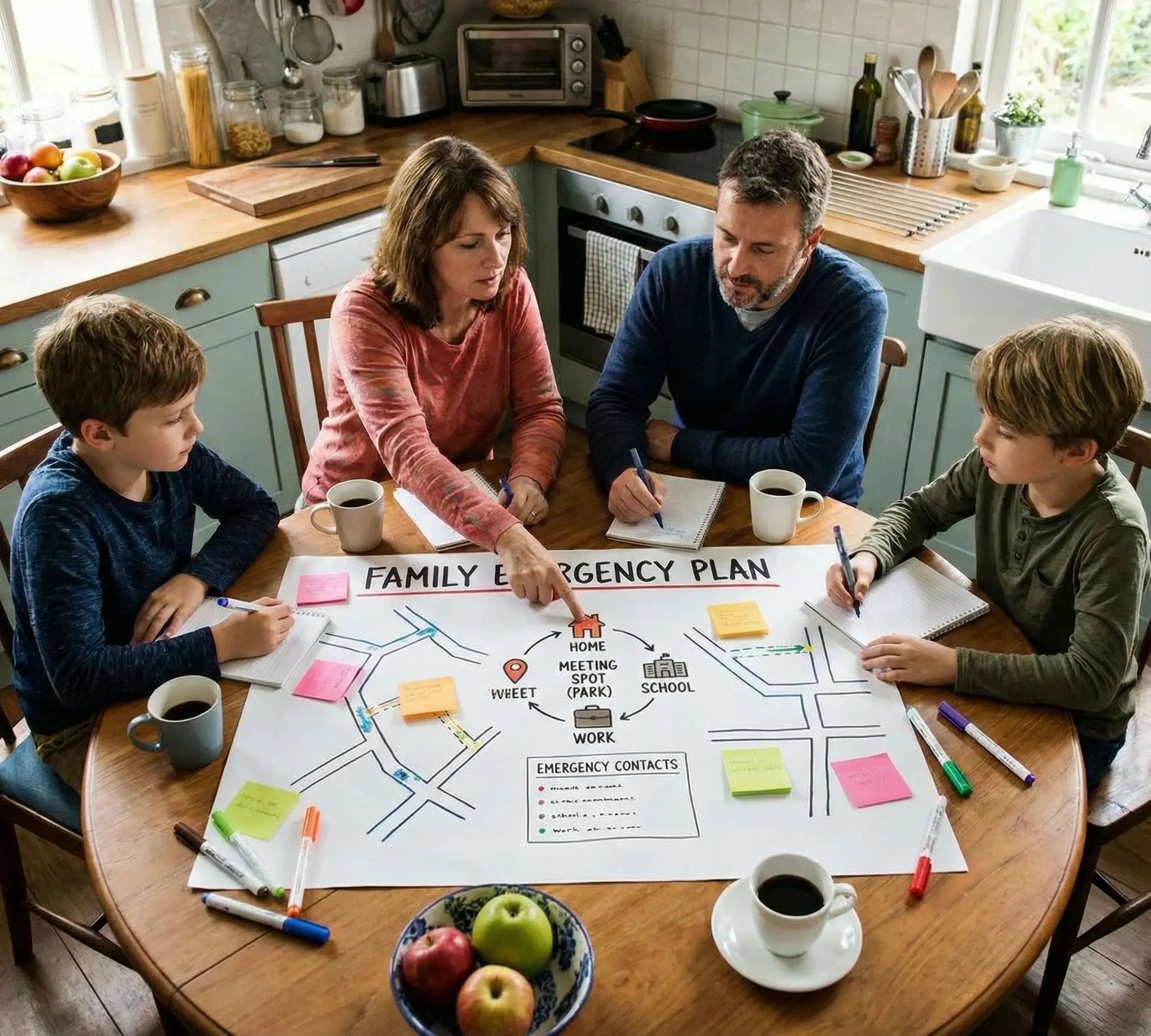
Step 2: Make It Visual
Children remember pictures better than words.
- Create a family emergency map for your home or backyard
- Use icons for meeting spots, exits, first aid kits, and tools
- Color-code for different scenarios
Visual cues make the plan easy to recall under stress.
Step 3: Practice Casually
Drills don’t have to feel like drills.
- Turn practice into games or missions
- Role-play minor scenarios (lost toy, short power outage)
- Encourage children to lead parts of the plan
Repetition in a calm, playful way reinforces memory and confidence.
Step 4: Assign Age-Appropriate Roles
Kids are more likely to follow a plan if they have a responsibility that matters:
- Young kids: gather flashlights or snacks
- Older kids: check that everyone is accounted for, help younger siblings
- Everyone: know where meeting points and first aid kits are
Roles build competence and a sense of ownership.
Step 5: Emphasize Calm Leadership
Children mirror adult responses.
- Keep your tone calm and measured
- Model decision-making without panic
- Praise initiative and problem-solving
Preparedness isn’t about fear—it’s about confidence. Kids learn more from your composure than your instructions.
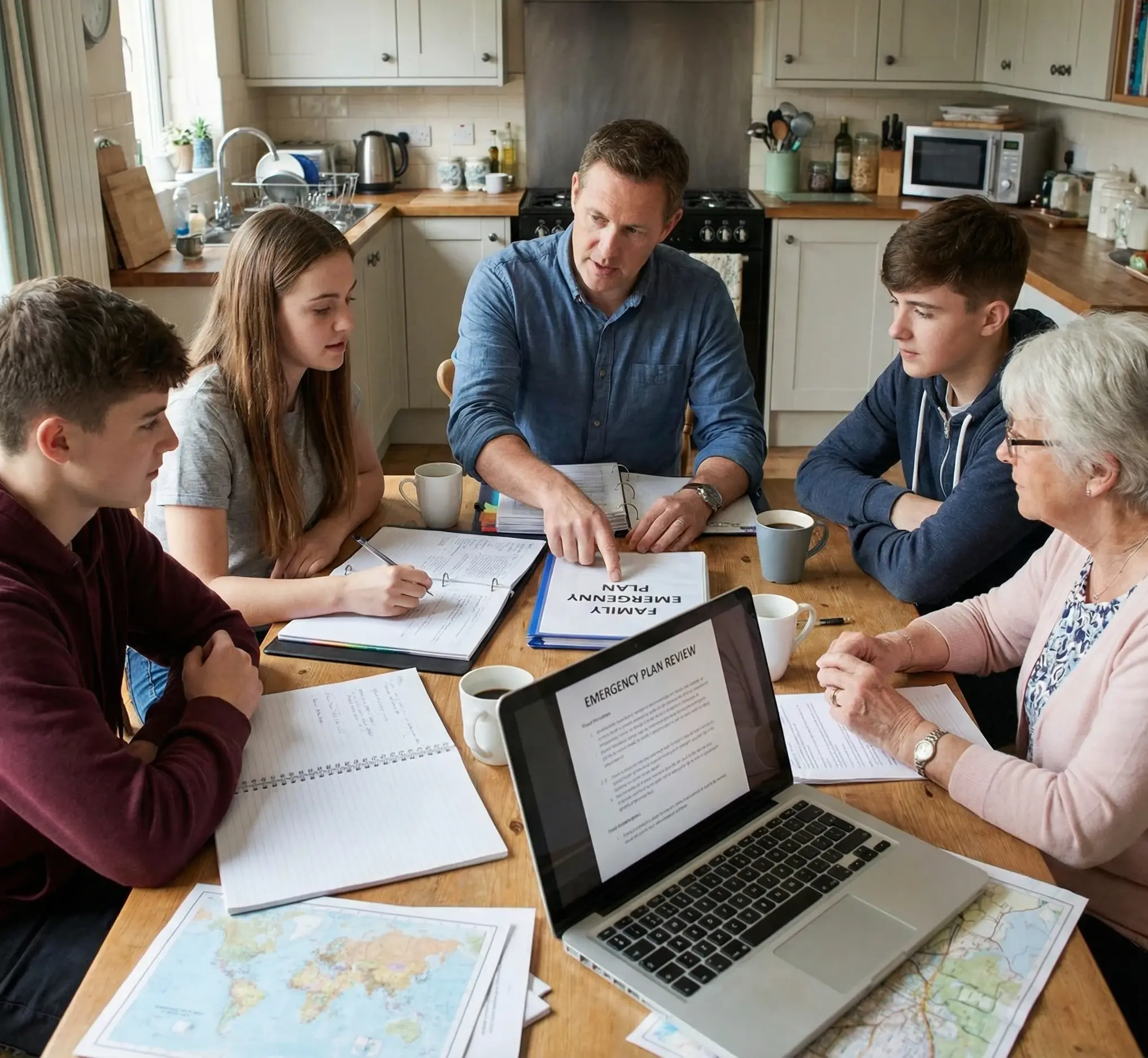
Step 6: Review and Adjust
Plans aren’t static.
- Review quarterly or after small real-life events
- Ask children for input: “What would you do differently?”
- Adjust roles, locations, or routines as they grow
This keeps the plan practical and relevant.
Step 7: Integrate With Everyday Skills
Connect emergency preparedness to skills they already practice:
- First aid from backyard adventures
- Navigation from local walks
- Problem-solving from small tasks
This ensures the plan is not abstract, but rooted in what children already know.
Key Takeaways
- Keep it simple – clarity beats complexity
- Use visuals – kids remember pictures more than words
- Practice casually – play embeds memory
- Assign responsibility – ownership builds confidence
- Model calm – children reflect adult behavior
- Review and adjust – plans evolve with children
- Tie it to real skills – preparedness becomes natural, not forced